Mecha Girl Handmade Product Rendering
Cultural prompt · by RoseKhlifa · published 2026-06-09
Prompt
Using REFERENCE_0 as the character design sheet, transform the armored mecha girl concept into a realistic {argument name="figure scale" default="1/7 scale"} painted collectible figure product photo. Convert the black-and-white line art into a fully colored, high-quality PVC/anime figure with crisp molded armor panels, glossy and matte material separation, subtle seams, decals, and toy-like sculpted details. Keep the same core character design, dynamic airborne pose, helmet, sword, shield, cape, skirt armor, and mechanical leg armor, but render it as an actual physical figure instead of a concept sheet.

Color and finish: Use the reference sheet’s color notes as the basis: {argument name="main armor color" default="white and navy blue"}, with {argument name="accent colors" default="red, gold, gray, and light brown hair"}. Make the face, hair, armor, cape, shield, and sword look like a premium painted prototype.

Composition: Show a single full-body figure in a three-quarter front view, centered, with the sword raised behind her and the large shield forward on one arm. Add a simple studio setup with a neutral {argument name="background color" default="gray gradient"} background and a clear circular display base beneath the figure.

Style constraints: No concept-sheet panels, no annotation boxes, no Japanese labels, no extra turnaround drawings, no text, no watermark. Make it look like a professional product render/photo of a yet-unreleased anime mecha-girl figure.
Example output
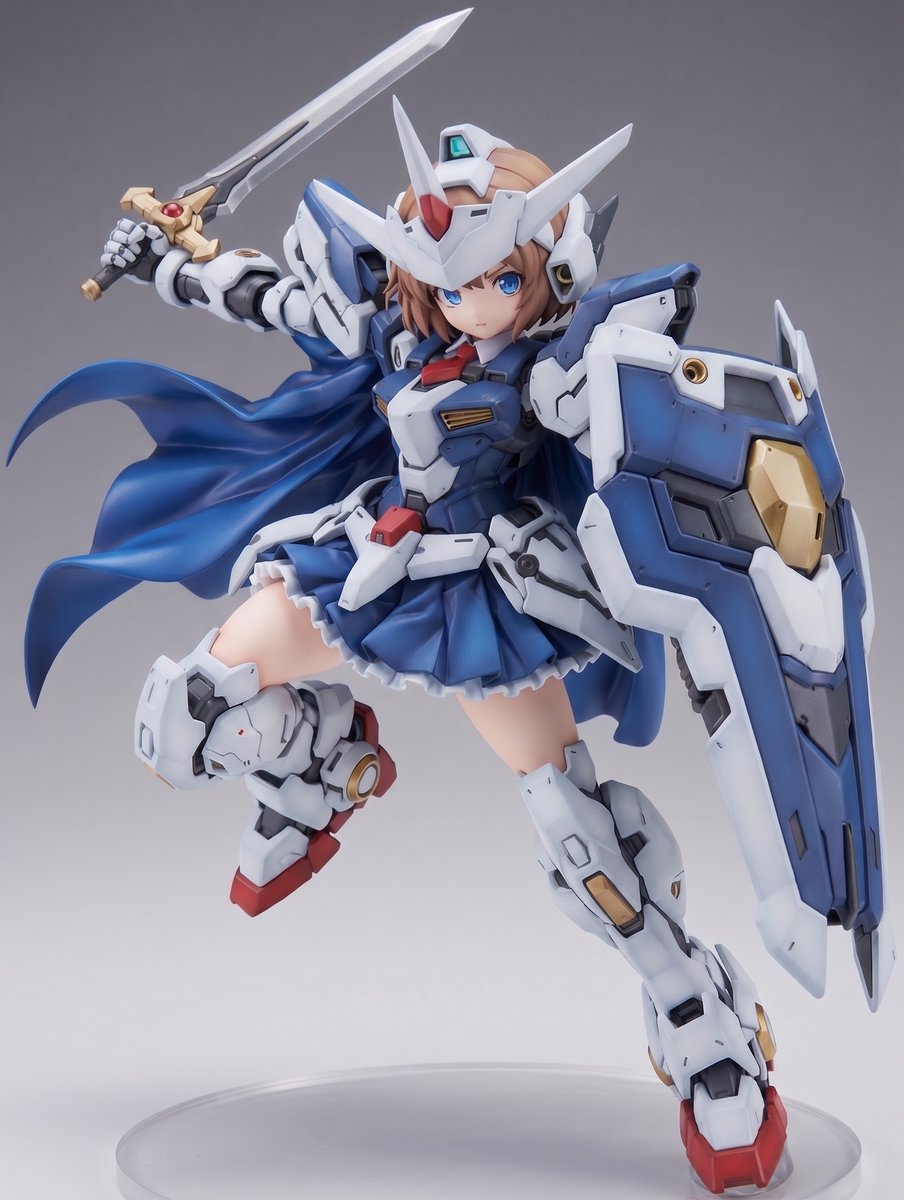
ProductCultural Creative Merchandise
How to use this prompt
- 1. Copy the full prompt text above.
- 2. Paste it into your image model — Midjourney, DALL·E, Stable Diffusion, or GPT Image.
- 3. Replace the subject, style or lighting words with your own to adapt it.
- 4. Adjust aspect ratio and steps in your tool; the prompt itself is tool-neutral.
- 5. Iterate on one variable at a time so you can tell which change mattered.